One wrong setting can shrink, stretch, or permanently damage a delicate garment. A little extra care at wash time keeps these pieces looking and feeling their best for years.
What Counts as a Delicate Fabric
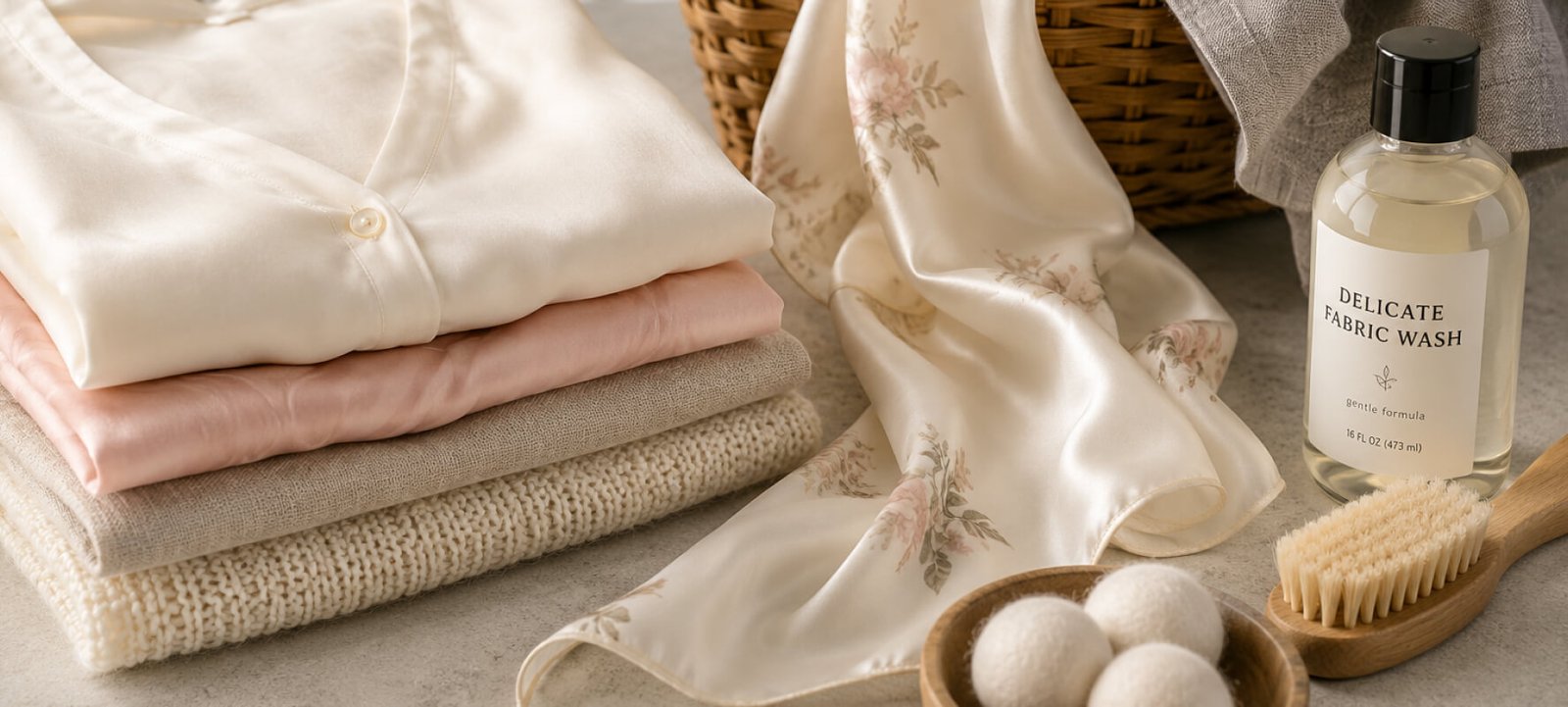
Silk, lace, chiffon, wool, cashmere, satin, and fine linen are the most common delicate fabrics found in closets. Anything with embellishments, sequins, beading, or a loose weave also falls into this category, regardless of the base material.
Read the Care Label First, Always
Before anything else, check the care label. “Hand wash only,” “dry clean only,” or “lay flat to dry” instructions exist because the manufacturer has tested how that specific fabric and construction responds to different care methods. Skipping this step is the number one cause of ruined delicate garments.
Washing Delicate Fabrics at Home
Hand Washing
Fill a basin with cool water and a small amount of mild, pH-neutral detergent. Submerge the garment, gently swirl it for a minute or two, and avoid scrubbing or wringing. Rinse thoroughly with cool water until no soap remains.
Machine Washing on Delicate Cycle
If the label allows machine washing, use a mesh laundry bag to protect the garment from friction, select the delicate or hand-wash cycle, use cold water, and skip the spin cycle if possible or use the lowest spin setting available.
Drying Delicate Fabrics Correctly
Never put delicate fabrics in the dryer. Heat causes shrinkage, weakens fibers, and can distort shape permanently. Instead, lay the garment flat on a clean towel, gently reshape it to its original form, and let it air dry away from direct sunlight, which can fade colors.
Storing Delicate Garments
Fold knits like cashmere and wool instead of hanging them, since hanging can stretch the fabric out of shape over time. Use padded hangers for silk and satin items, and store everything in a cool, dry place away from direct light.
Common Mistakes to Avoid
Using regular detergent instead of a mild, delicate-specific formula strips natural fibers of their softness. Wringing out wet fabric damages fiber structure permanently. And ignoring a “dry clean only” label to save time often costs far more in the long run when the garment is ruined.
When to Trust a Professional Instead
Some fabrics and constructions are simply too risky to handle at home, especially formal wear, heavily beaded pieces, or anything irreplaceable. A laundry service offering premium care and custom preferences can assess exactly how each delicate item should be treated, giving your finest pieces the specialized handling they need without the guesswork.
frequently asked questions
Yes, but only on a delicate cycle, in a mesh bag, with cold water and mild detergent to minimize friction and damage.
Heat causes shrinkage, weakens fibers, and can permanently distort the shape of delicate garments.
A mild, pH-neutral detergent specifically formulated for delicates is safest. Regular detergent can be too harsh and strip natural fibers.
Hand washing is generally gentler, but a machine's delicate cycle with a mesh bag can be safe for many fabrics if the care label allows it.
Fold them rather than hanging, and store in a cool, dry place to maintain shape and softness.
For formal wear, beaded or embellished pieces, or anything irreplaceable, professional premium care reduces the risk of permanent damage.